Language


Views: 248 Author: SONICNY Publish Time: 2026-11-11 Origin: Site


Content Menu
● Party Speakers vs HiFi Speakers: The Main Differences
● What Makes a Speaker Sound Clear at High Volume?
>> Headroom: Room for Musical Peaks
>> Bass Balance and Vocal Intelligibility
>> Distortion, Limiting, and Thermal Behavior
● Why Watts Alone Cannot Tell You Which Speaker Is Louder
● Party Speaker or HiFi System: Which Fits Your Listening Environment?
>> For Parties and Moving Audiences
>> For Mixed Home and Social Use
● A Practical Listening Test for High Volume and Music Detail
>> Step 1: Match Playback Levels
>> Step 2: Use Three Different Recordings
>> Step 3: Increase Volume Gradually
>> Step 4: Check More Than One Position
>> Step 5: Check Sustained Operation
● Three Engineering Trade-Offs Buyers Often Overlook
>> 1. Deep Bass, Small Size, and High Output Compete
>> 2. Battery Runtime Must Match the Use Case
>> 3. Stereo Pairing Adds Setup Requirements
● How Placement Helps Preserve Detail Without More Power
● What International Buyers Should Ask a Speaker Manufacturer
>> Can party speakers deliver detailed music?
>> Are HiFi speakers always quieter than party speakers?
>> What is the best speaker for loud music without distortion?
>> Does stronger bass mean better sound?
>> Will adding a subwoofer improve clarity?
>> Can two party speakers replace a HiFi stereo system?
● Build Your Speaker Brief Around the Listening Experience
Guangzhou Kanian Electronic Co., Ltd., the company behind SONICNY, develops and manufactures Bluetooth speakers, party speakers, and home speakers in Huadu, Guangzhou, China. Serving international markets, we focus on long-term partnerships and helping buyers select products that match real listening needs. When comparing party speakers vs HiFi speakers for balancing high volume and music detail, our starting point is simple: choose for the listening environment, not just the largest wattage number.
Party speakers generally prioritize convenient, room-filling entertainment. HiFi systems generally prioritize faithful reproduction and stereo presentation. However, neither label guarantees performance. A well-designed party speaker can preserve vocal clarity, while a capable HiFi system can deliver substantial output.
The useful question is not "Which category is better?" It is "Which system stays clear at the volume, distance, and listening position you actually need?"
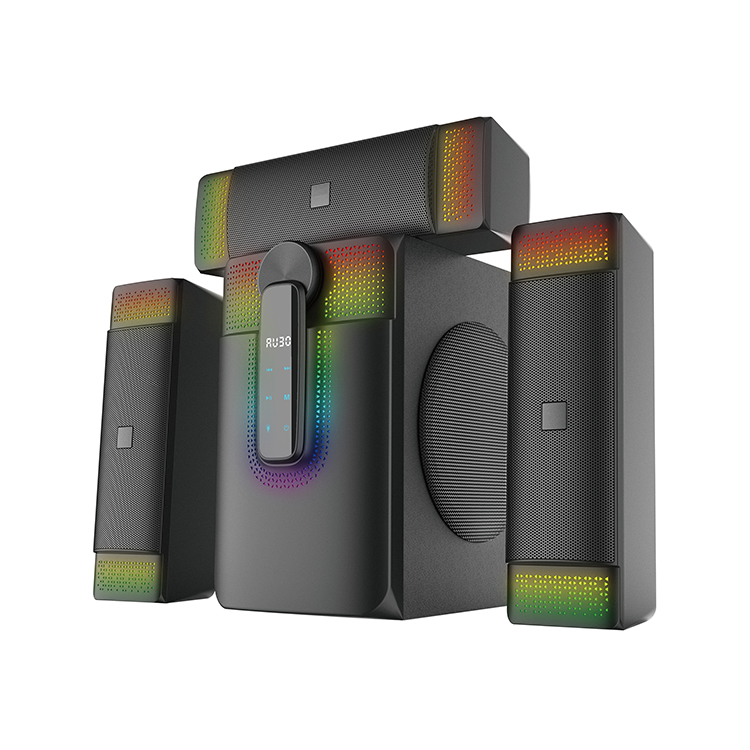
Party speakers and HiFi speakers often solve different problems. Understanding those priorities makes specifications easier to interpret.
| Comparison | Party speakers | HiFi speakers |
|---|---|---|
| Primary purpose | Social listening and entertainment | Focused, accurate music reproduction |
| Typical format | Portable or integrated powered cabinet | Separate stereo speakers or integrated active systems |
| Sound priorities | Bass impact, usable output, audience coverage | Tonal balance, imaging, instrument separation |
| Common features | Bluetooth, batteries, lighting, microphone inputs | Stereo connectivity, placement flexibility, system integration |
| Listening positions | Multiple people moving around | Often a defined listening area |
| Main buying risk | Strong bass hiding weak vocal clarity | Excellent sound at moderate levels but insufficient output for the application |
These are tendencies, not fixed rules. Some party speakers offer restrained tuning. Some HiFi systems have tremendous dynamic capability. Compare the actual product, not assumptions about its category.
Music detail includes vocal texture, instrument separation, transient attack, and the decay of notes. Keeping those qualities intact becomes harder as output increases.
Headroom is the available output above the normal playback level before a system reaches its limits.
Music contains brief peaks. A speaker operating near its limit may compress those peaks or introduce distortion. The result can sound loud but less open and expressive.
For buyers, the practical question is: does the speaker remain composed during a demanding chorus, not just a quiet introduction?
Powerful bass can create excitement, but excessive bass may obscure quieter musical information.
This does not mean bass and detail are incompatible. It means the low-frequency balance must suit the cabinet, drivers, playback level, and room.
Listen for whether vocals remain easy to follow when bass-heavy passages arrive. A bigger bass impression is not automatically a better-balanced speaker.
Drivers have mechanical limits, and amplifiers have electrical limits. Heating can also reduce output efficiency during sustained playback.
Digital signal processing, or DSP, can help manage these constraints through equalization, crossover control, and protection.
However, protection involves trade-offs. At higher levels, some systems reduce bass or compress dynamics to avoid overload. Evaluate that behavior rather than assuming DSP guarantees clarity.
Wattage describes electrical power under stated conditions. It does not directly describe the sound reaching a listener.
Acoustic output also depends on driver sensitivity, enclosure design, frequency, processing, and operating limits.
Before comparing power ratings, ask:
- Is the figure continuous, program, or peak power?
- Does it describe amplifier output or loudspeaker power handling?
- What test conditions and distortion limits apply?
- Is maximum sound pressure level measured or calculated?
- Does performance change between battery and mains operation?
A peak rating and a continuous rating are not interchangeable.
Likewise, a frequency range such as "40 Hz–20 kHz" is incomplete without a tolerance and measurement conditions. A response specified at −6 dB cannot be compared directly with one specified at ±3 dB.
From a manufacturing-selection perspective, clearly documented specifications are more useful than impressive numbers without context.
A party speaker is often the practical choice when portability, simple setup, bass impact, and entertainment features matter.
However, broad audience coverage deserves attention. Walk around during a demonstration. If vocals become dull immediately off-axis, listeners away from the speaker's front may hear a different tonal balance.
For larger gatherings, appropriately distributed speakers may provide more consistent coverage than one cabinet pushed harder.
A stereo HiFi system is often preferable when the goal is precise placement of voices and instruments.
That advantage depends on positioning. Left-right symmetry, speaker aiming, listening distance, and room reflections all affect imaging.
A single party cabinet may sound spacious, but it should not automatically be treated as equivalent to two properly separated stereo speakers.
Look for a system that supports both applications without making either unnecessarily complicated.
Useful features may include:
- Adjustable bass or selectable sound modes.
- Genuine left-right stereo pairing.
- Suitable wired inputs.
- Clear vocals at moderate and elevated levels.
- Enough output for the intended room.
Confirm whether wireless linking provides stereo channels or simply sends the same signal to multiple speakers.
Our recommended comparison process starts with repeatable conditions rather than brand reputation.
Use the same tracks and source device. Match the listening level as closely as practical.
A louder demonstration can seem more impressive even when the underlying reproduction is not better. A sound-level meter helps; phone applications are useful for rough comparisons but should not be treated as calibrated instruments.
Choose familiar tracks containing:
1. A clear vocal with sparse accompaniment.
2. Strong bass with a distinct kick drum.
3. A dense arrangement with several simultaneous instruments.
Each reveals a different weakness: tonal coloration, bass control, or loss of separation.
Start at a comfortable level, then briefly assess the intended operating range.
Listen for:
- Vocals becoming harsh or recessed.
- Bass losing definition.
- Cymbals turning splashy.
- Musical peaks becoming flattened.
- Cabinet rattles or audible port noise.
Avoid prolonged high-level demonstrations. Strong output capability is not a reason to listen at excessive levels.
Listen from the main seat, farther away, and to either side.
For social spaces, consistency across the audience may matter more than exceptional detail at one position.
If the application requires extended playback, assess whether tonal balance and output remain stable after the system warms up.
For battery-powered speakers, document volume, sound mode, lighting settings, and power source. Battery-life claims are meaningful only alongside their operating conditions.
A compact enclosure cannot deliver unlimited deep bass and sustained output.
Buyers developing a portable product should decide which requirement matters most: lower bass extension, smaller dimensions, longer battery operation, or higher playback level.
That decision guides driver selection, enclosure volume, amplification, and protective processing. It is more productive than specifying all four without priorities.
A maximum runtime figure does not establish how long a speaker will operate during a loud event.
For example, JBL's PartyBox 100 documentation states that its advertised playback duration varies with music content and battery aging.
For sourcing discussions, request runtime under a defined, relevant playback condition. Also ask whether output behavior changes on battery power.
Two speakers can improve stereo presentation, but only when channel assignment, placement, and synchronization work correctly.
Test pairing reliability, reconnection behavior, channel identification, and compatibility with the intended source.
For video playback, also check lip synchronization. A wireless music feature should not automatically be assumed suitable for every audiovisual application.
Before replacing a speaker, examine its surroundings.
Walls and large surfaces reflect sound. These reflections can alter bass balance and blur imaging. Placement therefore affects both perceived clarity and tonal accuracy.
For a home stereo system:
- Place the speakers symmetrically where practical.
- Aim them toward the listening area.
- Follow the manufacturer's guidance on acoustic-axis height.
- Adjust wall distance according to the speaker and room.
- Reduce obvious early reflections where feasible.
Do not apply a universal rule that every speaker must sit far from a wall. Boundary effects, rear-port clearance, and cancellation interact differently in different installations.
For social listening, keep speakers unobstructed and assess coverage at listener height. Better placement may improve intelligibility without raising the volume.
*[Suggested diagram: A stereo listening triangle beside a party-space coverage layout. Show listening positions and major reflective surfaces, not unsupported performance predictions.]*
For distributors and brands, good sample sound is only part of the decision. Repeatability and documentation matter too.
A useful purchasing brief should define:
| Requirement | What to clarify |
|---|---|
| Target application | Home listening, portable entertainment, or mixed use |
| Acoustic performance | Frequency response, output limits, distortion, and test conditions |
| Power and runtime | Battery capacity, playback conditions, charging, and mains behavior |
| Connectivity | Inputs, pairing modes, channel assignment, and compatibility |
| Production consistency | Approved sample, inspection criteria, and acoustic checks |
| Market requirements | Applicable safety, EMC, radio, labeling, and battery requirements |
| Support | Warranty terms, spare parts, and issue-resolution process |
These are questions to resolve during supplier qualification, not claims that every manufacturer offers identical capabilities.
At SONICNY, our stated focus is Bluetooth, party, and home-speaker development and manufacturing. We welcome specification-led discussions that connect the intended listening experience with the product brief.
Yes, depending on their design and operating level. Assess vocal clarity, tonal balance, distortion, and off-axis performance. The party-speaker label alone does not establish sound quality.
No. HiFi describes a reproduction goal, not a fixed output limit. Some systems deliver substantial output. Compare documented capability at the required listening distance.
Choose a system with enough clean output for the application. Listen at the intended level and examine distortion, limiting, and sustained performance rather than relying on wattage alone.
Not necessarily. Bass should support the recording without overwhelming vocals and instruments. The right balance depends on the music, room, placement, and listener preference.
It can, when proper bass management reduces the main speakers' low-frequency workload. Simply adding a subwoofer without suitable crossover and level settings does not guarantee clearer sound.
They may suit some listeners if they support genuine stereo pairing and balanced reproduction. Check synchronization, placement, tonal accuracy, and connection options before deciding.
The right balance between high volume and music detail comes from matching output, tuning, coverage, and placement to the application.
Choose party speakers when integrated entertainment and convenient social listening lead the brief. Choose a capable HiFi system when focused stereo reproduction is the priority. For mixed use, test both requirements explicitly.
Contact Guangzhou Kanian Electronic Co., Ltd. with your target market, listening environment, preferred product format, connectivity needs, and expected order requirements. SONICNY welcomes long-term partners seeking a speaker-manufacturing relationship in China built around clearly defined product needs.
The sources below support the general engineering discussion. They do not constitute independent verification of SONICNY product performance.
1. Guangzhou Kanian Electronic Co., Ltd. / SONICNY — Company background supplied for this article: location in Huadu, Guangzhou; Bluetooth, party, and home-speaker development and manufacturing; international sales; and long-term partnership focus. No public company page, original article, customer reviews, or model-specific test reports were supplied.
2. Genelec — "Studio Monitor Placement." Guidance on stereo geometry, acoustic-axis height, aiming, symmetry, and the effects of reflected sound. [genelec]
3. Genelec — "How to Improve Room Acoustics." Explanation of early reflections, boundary cancellation, wall placement, and rear-port clearance. [genelec]
4. Genelec — "Studio Monitor Calibration." Discussion of room influences, frequency-response measurement, level alignment, and calibration. [genelec]
5. JBL — "Control 29AV-1 Specification Sheet." Examples distinguishing frequency range, response tolerance, sensitivity, short- and long-term SPL, and stated measurement limitations. [jbl]
6. JBL — "PartyBox 100 Specification Sheet." Product specifications and the qualification that battery playback duration varies with music content and battery aging. [jbl]
7. JBL — "JBL 7 Series Powered Reference Monitors Owner's Manual." Guidance connecting listening distance, room acoustics, placement, and available sound pressure level. [jbl]
8. Genelec — "8010 + 7040 Stereo System." An example explaining how an appropriately integrated subwoofer can increase system headroom and sound pressure capability. [genelec]
Hot Tags: China, Global, OEM, private label, manufacturers, factory, suppliers, manufacturing company